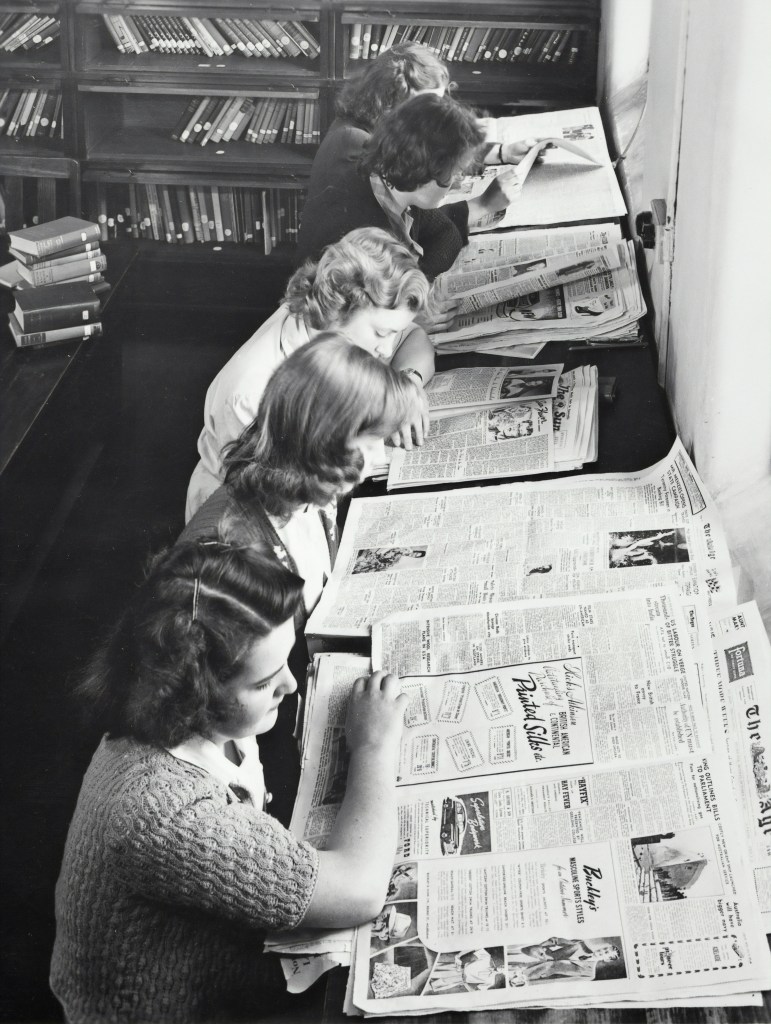
Most of us went to school and learned vaguely what a democracy is. We know there is something about a President, a Congress, voting, states, manifest destiny, slavery, yada yada on and on. We generally accept that this giant contraption runs on its own with barely any input from us in our daily lives. At minimum, most people participate politically once every four years (reluctantly). Some others of us may understand that the institutions that make up the country are propped up on citizen led institutions we believed would be a net good and we let them hang around because although problematic and flawed, they generally accomplish what they were designed to do. Public schools educate the young in the hopes of creating good citizens. State Universities create skilled laborers and good consumers. The military exists to create new leaders and provide for the common good of defense. Journalism exists to inform us so we can make better decisions and be connected to our broader communities.
Amid massive layoffs within American newsrooms, the perilous decline in journalism and journalistic outlets has come to the forefront as yet another crisis. For decades newspapers have been shutting down and downsizing. Online outlets that sought to cover niche topics such as auto culture and sports have been taken over by media conglomerates. The idea of the “citizen journalist” has proven to be the worst kind of experiment where your weird Aunt Jenny posts her freewheeling lizard people conspiracies to her Facebook account. In reality it was not supposed to be this way, but this is what we prepared ourselves for. As technology advanced and the nature of how companies become profitable changed, we collectively lost sight of what it means to instill our democracy with responsible institutions. We’re part of the problem. Less than 40% of the public support and trust local news. Many TV and radio journalists seem to be more preoccupied with fame and status than concise reporting. Even when they are, the growing phenomenon of “Bothsides-ism” has brought on a further distrust even from their supporters. This particular irritation is brought on mainly by interests adverse to accurate or conflictual reporting and this absolutely moronic idea rooted in both intellectual vanity and ignorance that there are no objective truths. We have watched for more than a decade now the people who believe that facts can never be truly knowable or that expertise amounts to nothing more than moderately weighted opinion erode the very concept of what it means to know a thing worth forming opinion on. Even our favorite weirdo founding father Thomas Jefferson was wary of this stating in a letter to newspaper editor John Norvell, “the man who never looks into a newspaper is better informed than he who reads them; inasmuch as he who knows nothing is nearer to truth than he whose mind is filled with falsehoods & errors. He who reads nothing will still learn the great facts, and the details are all false.”
This belief about the failing objectivity in journalism may be the largest portion of why it is failing. For conservatives, objectivity left the game before warm-ups. They have never once been under the hallucination that news is supposed to do anything but persuade. To form and craft opinion. To inform and foment complacence. That’s been their angle by air, land, and sea. Radio, TV, and print. It is just those paladins of the news world, guided and empowered by faith who believe the local newspaper is just supposed to report the facts. Objectivity is useful in casting away doubt and facilitating argument but it is a problematic concept in and of itself. Always has been. Objectivity can cause a person to doubt their convictions. Makes them report on wars a bit differently. Makes them report on the activities of the police a bit differently. It relieves responsibility and the need to be held accountable. Given enough time and enough nudges, all you’re left with is the trained need to equivocate both sides of every issue. In order to get the full story we must hear from those who oppose slavery and those who are absolutely pro-slavery because we might learn something from the debate.
The most prescient issue for the public might be the looming threat of AI on America’s newsrooms. AI is not the cause of faltering newsrooms and journalistic outlets, but it is the bottom feeder watching from the dirt. At present, it makes too many mistakes to pass for human activity. We can allay some of the concern right now. AI is not going to be an effective journalism tool. At scale, AI will probably take over the role for doing what many a journalism major ends up doing anyway: cat quizzes and listicles. AI will excel at doing what humans hate doing like telling you where ‘Past Lives’ is streaming and ‘The 37 Best Ways to Remove Rust from Your Cybertruck’. It cannot and will never be able to do consumer reporting. It cannot and will not go on the ground in a conflict zone to report on the atrocities of war. It cannot and will not test drive a car and rate the experience using a grading methodology. It can’t tell you what music venue to go to. It won’t inform you of the latest political debates within your local school board. It cannot interview a prospective candidate for mayor and press them on questions of their political merits. It can’t go undercover in a gym in Orange County and report on its connections to white supremacy. It can’t embed itself in a police department and report for public accountability. It won’t give firsthand accounts of medical malpractice within a hospital. You will be fine on that front, do not get distracted from what the real problems are. AI is not nearly as widespread as we believe it is and there is evidence to show its growth is already slowing if not regressing. As McKinsey has stated, 55% of their respondents have adopted AI but only 23% of those respondents stated 5% of their earnings can be attributed to AI. The use cases for mass journalism adoption of AI just aren’t there yet.
Journalists are always navigating the difficult path of informing the public while also being salesmen for news and particular viewpoints. The overlap of these two sectors becomes more and more narrow each year. They get paid based on how many eyeballs they attract and maintain. Journalists have always competed with your weird Aunt Jenny, but now Jenny has a TikTok account that receives as many eyeballs as most nightly news correspondents do. As journalism backslides it creates a vacuum that both Jenny and AI will be happy to fill, but neither are perfect or anywhere close to being as effective as professional journalism. People have come to conflate journalism with any information they receive. This conflation leads to a less informed public, less government oversight, more misinformation and polarization, and increases the costs of local government.

So how do we fix this? There are maybe a few dozen proposed policies that would aid in revitalizing journalism. They each approach different issues. Some aim at increasing funding access to journalism; easements of sorts. Others target the core precepts that are predatory in the journalistic ecosystem; social media news, AI, fake news, the rise of news as entertainment/sports. These policies vary in their range of implementation. Some are things you and your buddies could go do right now. Others would require a mayor and city council, or an act of Congress. One thing is for certain: it is good to have a large amount of solutions to a given problem.
Limit the capitalist aspects of the institution. Journalism is a human activity that can be conducted independent of capital. The problem is people need money to do what they do, and newspapers need money to continue operating. Newspaper revenue has been declining since 2000, right around the time the internet started experiencing its widespread post Y2K usage. The United States government extends subsidies and financial aids to business sectors in order to better plan the economy and help it resist the damages from its own activities. We do it with farms, banks, and manufacturing. To wit, the Inflation Reduction Act aims to coax American manufacturers into areas they long abandoned by offering them a vast range of grants and tax incentives. The government spends billions on advertising and services each year. Direct some of that to local news. Give businesses tax incentives at the local and regional level for advertising in papers. Check out a proposed (bipartisan!) version of a bill supporting this here.
School boards really should discuss and implement media literacy curricula. Other countries have already jumped on this. Believing that the foundation of a democracy is the opinions of the people and believing that these opinions can be toxified by the varied interests that conspire against them, it makes sense to prepare the populace to be critical and skeptical of information they receive even from a trusted source.
Replant newspapers and local news groups. Recognizing that journalism is a public good, municipalities could offer grants to local news groups. As newspapers have been shutting down left and right since forever, bringing back newspapers offers people news at the local level from their communities. As an example, the Los Angeles Sentinel utilizes a cooperative news model, soliciting news from the community and running it through professional journalists. This model however is expensive and difficult to replicate in communities that lack the capital to sustain a newspaper.
These are at least a start and things we’re already presently doing in similar sectors. I would advocate for other things like regulating social media platforms, giving tax breaks for them utilizing local news advertising, etc., but I don’t see this as a way to get people back to the news. Facebook has already gotten out of the political news game and TikTok is learning year on year what it means to give unimpeded access to anyone who wants to spread information on their platform. Revitalizing journalism is about more than funding, it’s about reminding people of its necessity. The days of us returning to watching the nightly news at 6pm on a weeknight and reading the Sunday edition of the town paper are likely gone and only to remain in the circles of enthusiasts with manual transmissions and flip phones. These are just the effects of advancing technology and changes in our preferences.
This is just one fight occurring within our communities nationwide. All fights are local. We have to approach this problem like any other with the aim of preventing the most ignorant and misinformed of us from possessing outside influence. We must stop Aunt Jenny at all costs, lest the products of our newsrooms be eternally generated poor AI articles about cat people running school boards.
Notes and Sources
Referenced in this editorial was content derived from Rebuild Local News – The Crisis – Rebuild Local News. In addition, thoughts and materials from Ed Zitron’s newsletter were used. All other citations in text. For further reading read this article by Steve Waldman.
 Way Past Policy