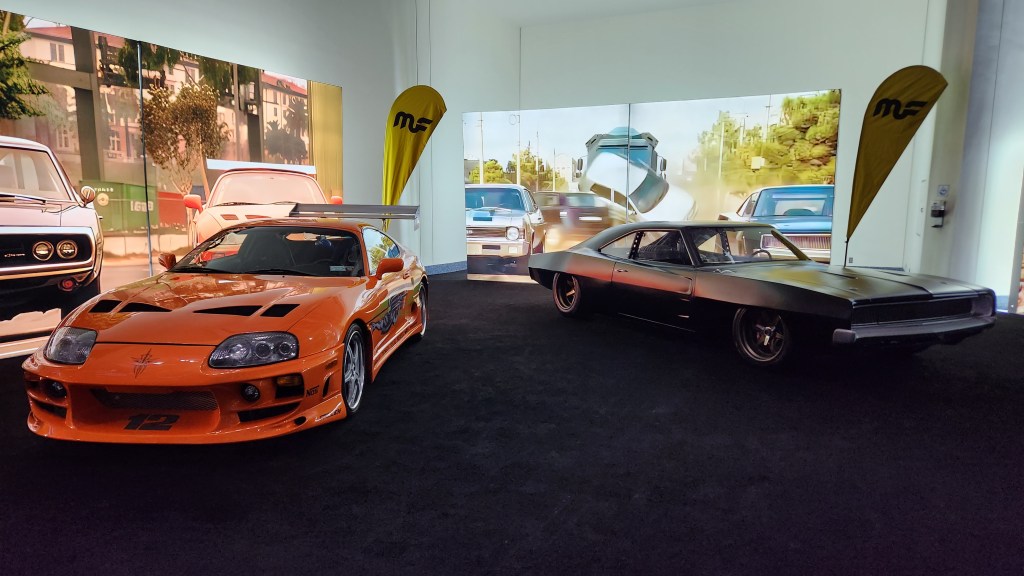
I’m something of a car guy. Growing up I watched NASCAR on TV with my dad and was more fascinated by the cars than the drivers. I, like so many other future millennials, watched a young Paul Walker drive the gaudiest (and only) Toyota Supra to ever grace the silver screen in The Fast and the Furious and became enamored with not only street racing culture but also t-shirts from Aeropostale and house music. This also led to me doing an entire major report assignment in 8th grade on “tuner cars”. An academic misadventure years before I could drive. I spent my youth as a fan of all things automotive and this has pretty much followed me into adulthood with the only change being I can actually drive and I can actually afford to do things that don’t just involve spectating. A major holdover from youth has been being a consistent yearly attendee at the Los Angeles Autoshow.
I’ve been attending the autoshow for well over twenty years with a few years off due to living outside of the city. But even in those years I still followed along. The autoshow is really the only hobby based convention I attend in my personal life. For years, it was one of the few major things my dad and I looked forward to attending. Dodgers opening day and the LA autoshow. Autoshows occur in just about every major city on the planet. They’re commercial conferences highlighting the latest and newest in automotive technology and newest models for sale currently. Every now and then you get to see a prototype or concept car that showcases a design aesthetic or technology that aims to define a company for the next year or so. It’s essentially a fashion show for things that go fast.
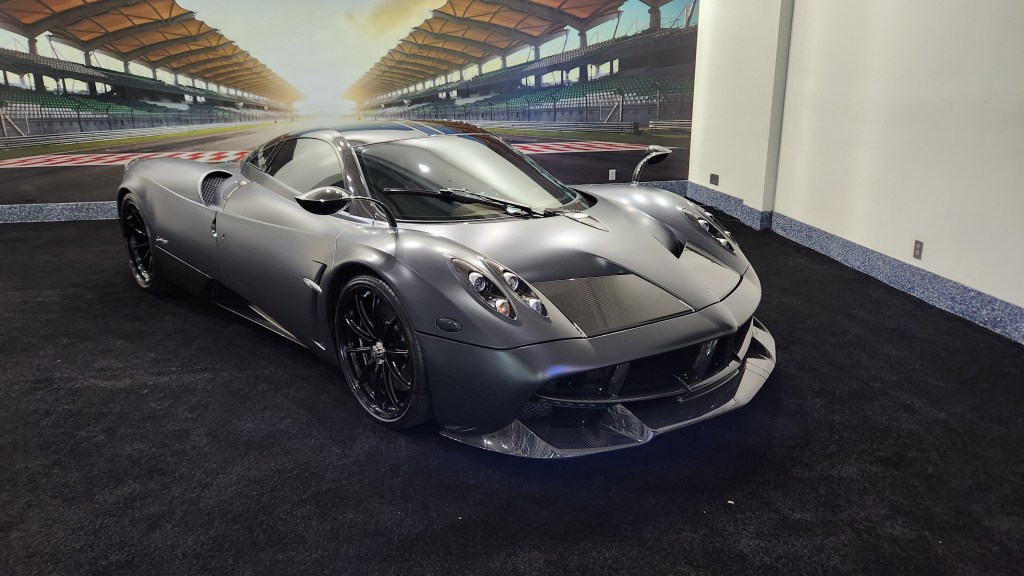
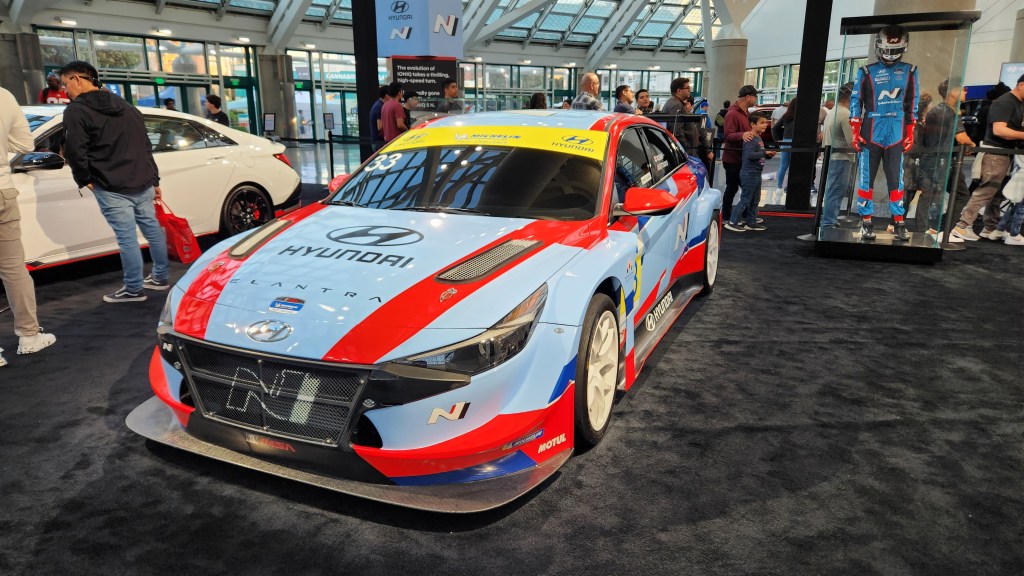
This being said, autoshows more and more are beginning to reflect the politics of our living world. Before, particularly in the before times pre-Covid, autoshows were almost entirely consumer based focused entirely on what the original goals of the show were: get products in front of possible buyers and convert contacts to future sales. If you’re a product manager for an auto manufacturer, you want your cars in front of as many eyes as you can get them in front of. However, as the world changes becoming more and more critical of personal transportation and more supportive of walkable cities and alternative forms of transport both public and private, autoshows have changed with them. They’ve become less about showcasing new things that most people can’t afford to buy and more on the concept of transportation as a whole. You aren’t going to see buses and trains at the autoshow obviously but you will see concepts of future transport. The shows seem to be in this weird place between catering to enthusiasts and showcasing to consumers and as such the auto industry as a whole seems to be taking cues from enthusiasts. Cars are becoming more specialized. More “techy”. Way less accessible to casual drivers. Even cars we see as modest or boring are starting to incorporate more aggressive stylings and technology bred from competitive racing. Or even experimental. For instance, magnetorheological suspension systems are most famous for being utilized in hypercars developed a few years ago, the Mclaren P1 being the prime example. These suspension types are now commercially available for placement on your Hyundai Sonata.
I have previously referred to the 2021 LA autoshow as the quietest automotive event on earth and for good reason. During covid, and a bit now, there was a huge gap in the automotive market. The megalithic American auto industry had grinded to a halt with supply chain issues and lack of sales. covid stopped the freeways. It silenced the streets. Gas had dropped to pre-war prices. In some areas people were experiencing a world void of cars; semi-permanent walkable streets without a threat of being run over. For nearly a year we got to see a world without cars. It was kinda nice. In this space the autoshow turned to the burgeoning market of EV’s as an alternative to a more traditional type of event. The future, after all, was electric. And so the 2021 LA Autoshow showcased a huge amount of electric vehicles. Rivian was there along with Tesla, Canoo, Vinfast, Mullen, and EdisonFuture. Oh, and Fisker. The more modest manufacturers showed up to debut exclusively electric vehicles that were being fast tracked to production. Mostly to take advantage of the California auto market and favorable policy conditions. Nissan debuted the Ariya (well known for being trapped on ships at sea), Toyota showed off the insanely named bZ4X, and BMW showed up with their concept for an electric scooter. In addition, attendees would get to see the world debut of the Fisker Ocean and the Subaru Solterra. Additionally, boutique auto manufacturers were present such as Aitek and Bremach. Of the EV manufacturers that showed up in 2021 zero were present at this years show.
There can be many reasons for this. Commonly, autoshows are risky. They’re expensive to participate in and it’s generally difficult to track how much of the time invested to showcase your new car is paying off. For smaller manufactures that forgo the traditional sales model (think Tesla “dealerships” in malls), it can be useful as the show might be the first time a possible customer has seen and interacted with your car in person. Furthermore, although it’s publicity, it isn’t exactly free. All attendees have paid to be there, and it’s safe to assume that upwards of 95% of attendees already own a car. The best possible outcome is making a sale and the second best is getting an email of someone who is interested in buying a corolla in 2026. You’re essentially catering directly to enthusiasts and lovers of the industry. As described to me by a product specialist I spoke with, it’s essentially the equivalent of a band playing only in front of their fans their entire career. These specialists are routinely confronted by people who know more about the cars than they do. They’re salespeople there to get people excited about the brand, not designers or engineers. They’re in this weird place of being sales at a place where nearly everyone is an avowed window-shopper.
Another reason we might have lacked these brands might be due to the nature of conferences in general. Space is limited. In many ways it may simply not be worth it to compete with the conferences stalwart behemoths that are present each year with guaranteed space. Floor space in general is oddly distributed with no real consistency in logic. In one hall of the convention center Ford took up nearly 60% of the available floor space, not including the massive indoor test drive track for the Bronco. Comparably, Subaru held almost as much in a separate hall even though they have a vehicle line only about 1/3rd the size of Ford. Honda, one of the most recognizable and largest companies on the planet held a space around the size of a modestly spacious condo. Kia, a brand steadily growing in newly found recognition, appeared to be visible from nearly every corner of the building. Mazda, BMW, Mercedes-Benz, Porsche, Land Rover/Jaguar, and Audi were conspicuously absent despite posting good sales and having a large presence in the state. They skip years periodically but all of these large brands have EV’s and new cars to showcase. Not seeing Porsche, in particular, pained my heart greatly.
The autoshows of 2021 and 2022 compared to 2023 were also much more policy driven. Toyota showcased their concepts for the future of private transportation and there were companies showing off design concepts for self-driving cars. We may see this as the auto industry becoming a lot more aware of their place in the visible political landscape. As previously stated, covid made a lot of people develop more progressive views on a lot of things. Experiencing a world that temporarily lacks a commonplace thing can make you do that. At minimum they became more amenable towards them.

There are a few major things we can take from the autoshow this year.
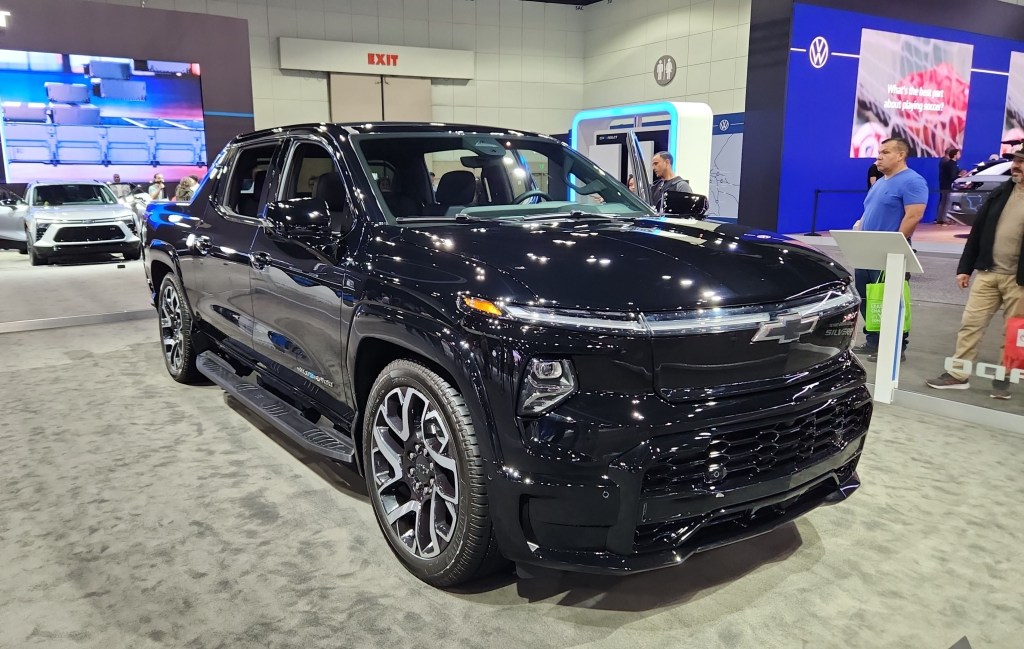
First is that EV bloat will inevitably kill us all. Trucks are massive now. The remaining marketable sedans are getting bigger in order to accommodate space for batteries and more complex drivetrains (additionally, lack of things like gas tanks and traditional transverse drivetrains means more space for larger seats and trunks). And the compact crossovers and utility vehicles of today are the size of mid-size SUVs from five years ago. The complaints of massive trucks striking pedestrians in LA are numerous. It happens often enough to where it has drawn the ire of community officials and public safety representatives.
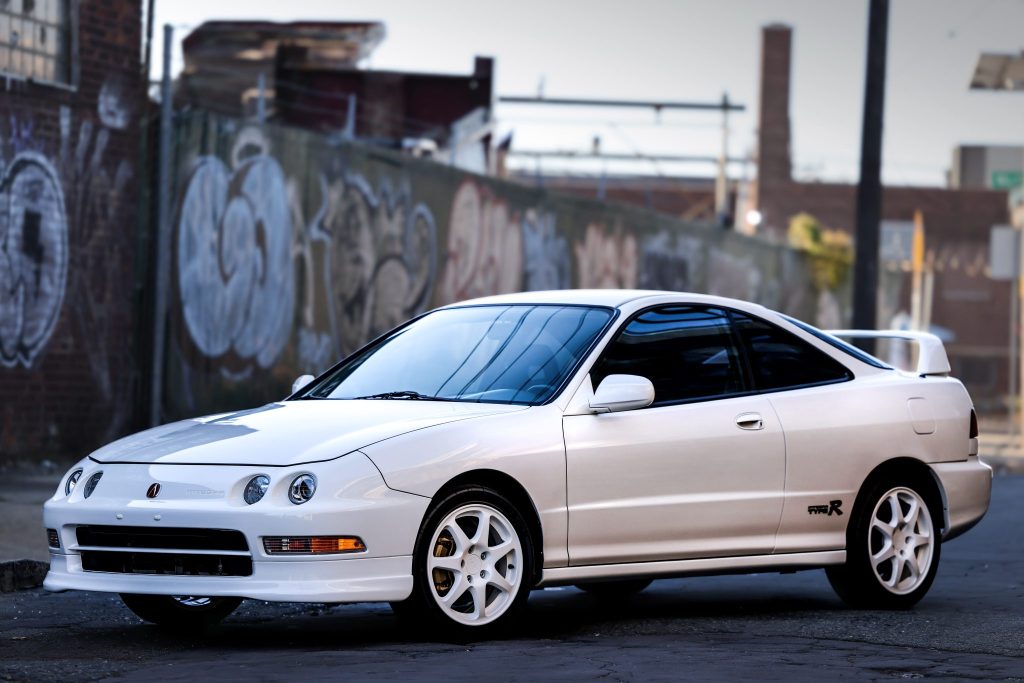
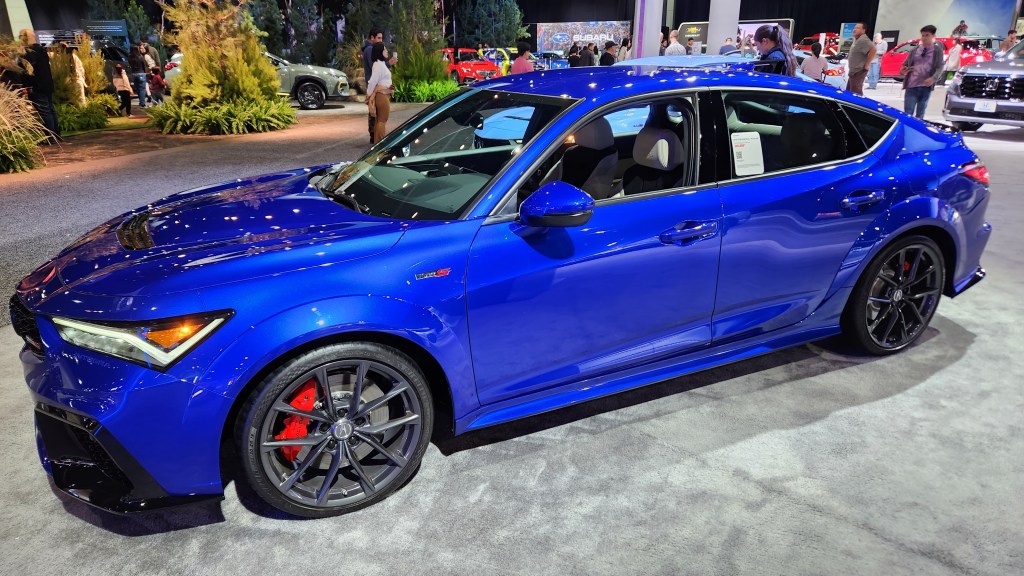
Second, what’s old will be new again but slightly worse. The Honda Integra was at one point considered to be the greatest front wheel drive car ever made. It was regarded by street racers as being an affordable and accessible hotter version of the venerable Honda Civic. You could theoretically go grab a ’97 Integra at Shady Uncle Eddy’s car lot right now for maybe three grand. (in very poor condition). As it stands now the relaunched Acura Integra is a $30k+ sport luxury four-door sedan with a top of the line variant, the type-S, to round you at about $52k. The Integra base model is mechanically identical to the Honda Civic Si which is around $20k cheaper. This is basically a sign of how the auto market will be for the next decade or so. Manufacturers will continue to revive dead nameplates banking on Millennial nostalgia and the hopes that people who remember their weed dealing cousin owned an Integra might have more money now. Honda has also revived the Prelude as a two door EV similar to Mazda and the MX-5.
Third, cars aren’t going anywhere. For those of us hoping to enjoy the benefits of a more Europa Americana style of transportation we can rest assured that the systems and institutions that govern our way of life are fighting tooth and nail to ensure it stays that way. A train from LA to Vegas seems more and more of a farfetched idea as automobile technology seems to advance rapidly every six months or so. The car, despite its myriad flaws and various setbacks, has remained more or less affordable and accessible for average Americans. It provides a degree of autonomy that we can’t get with public options (yet). So, until we shift our culture towards valuing community solutions to personal I don’t see this changing. People will continue to buy cars until we stop making them. I know this because Ford unveiled the most ludicrous Mustang ever. An 800 horsepower demon sitting right next to a modestly outfitted baby Bronco. Someone is buying this. With this being the last years of the Camaro and the Challenger as we know them, the Mustang will be the last true American pony car remaining.

Fourth, EV’s are becoming less boring. manufacturers are learning that cars are allowed to be designed tastefully and attractively. For a while there cars were likely to run afoul of LADA syndrome. Tesla is already there. Cars are starting to look like cars again with the Toyota Prius looking less….boring, and the Ioniq family from Hyundai looking like someone actually did more than type “car please : )” into an AI design app and press Go. Other noteworthy stylings include the Chevy Blazer EV, Honda Prologue, and Toyota Crown Signia.

What all of this means is still up to how you feel about cars and transportation policy in general. I feel about loving all things auto the same way socially conscious fans feel about the NFL and football. The sport is deeply problematic with problems that have been highlighted by books and movies. It’s hard to be a fan of an industry that has left near-irreparable damages to our environment and our planet and the acceleration of demand for EV’s has led to further stripping of our planets natural resources. these resources are becoming more and more controlled by countries that are leaning away from Democracy in recent years which is leading to a strange new frontier of proxy conflicts between corporations and nations both in the present and future.
If you don’t care about cars then you wouldn’t be caught at something like the LA Autoshow. If you’re a policy nerd you probably wouldn’t be interested either since you only see it as a consumer showcase. However, I encourage everyone to look between the lines here and see what companies are trying to pass off to us through policy dogwhistles. Are we informing the auto industry through our habits and purchasing patterns as much as they are informing us? Within the auto industry it’s well known that companies don’t have as much control over what people buy as we believe they do. Many people don’t care what their car looks like or drives like. They chose it because they could afford it or because it came in a cute color. Maybe that have four children and needed the extra space so they chose and SUV. A car is as much a lifestyle indicator as it is a tool; a machine that facilitates the chores and labors of everyday life. If they don’t want a truck, they won’t buy one and Ford or Chevrolet can’t do anything about that but offer them something else in their product lineup. If products are outright rejected then the company generally fails. You can ask Coda, Aptera, Fisker, and Canoo what it’s like to enter the market with a product people aren’t fully ready to embrace as anything other than a novelty. By attending autoshows with a policy critical framework you can see what companies think we care about. If we have to have cars, do we want them smaller? Safer? Subaru seems to think so. Are we essentially all buying cars because we have families and active social lives? Kia thinks so. Do we hate cars and hate driving but have to get something because we live in a highly urbanized environment that requires we have one? Honda has your back.
In the future you’ll see trends change and tend towards cars being scaled back in lineup sizes and more towards enthusiast buyers. It’s already happening. We’re already trending towards a world in which all EV’s are essentially the same just varying in features and speeds. Tesla already fully believes there is no way to differentiate one car from another so they don’t try. Their buyers don’t care. At some point the only people buying cars will be those who love them and desire them and those who loathe them but need them. We aren’t going to get rid of cars but we may find clever ways to marginalize their necessity.
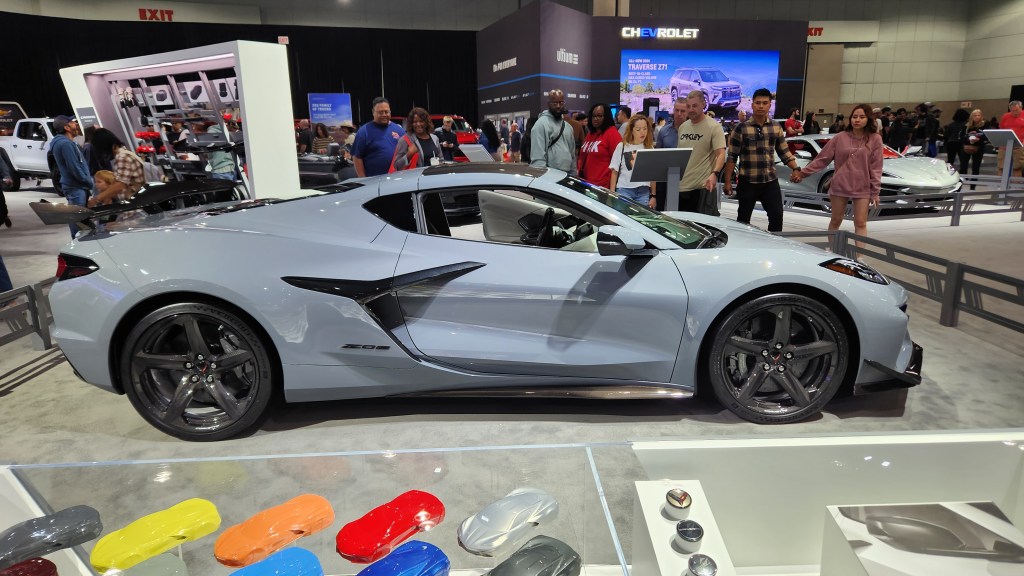
If the 2021 autoshow was a showcase of the future of what the industry looked like then 2023 was the knock at the door of that future and the ushering off of a previous era where cars were more important.
 Way Past Policy