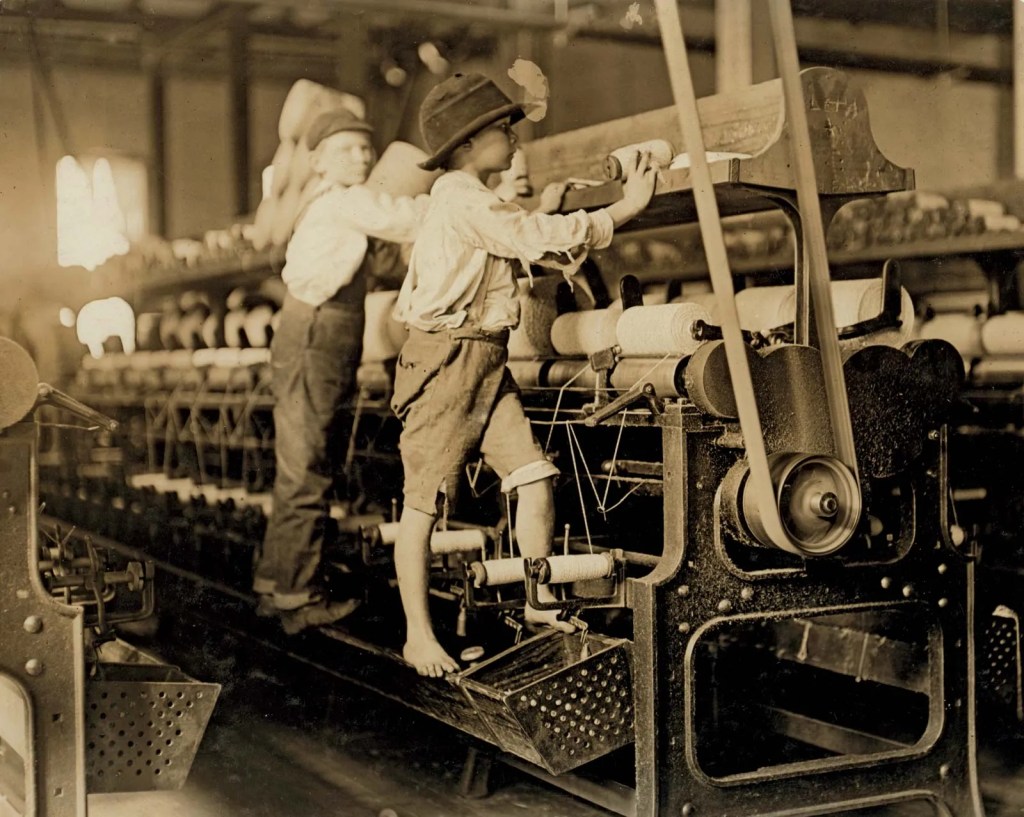
Imagine for a minute that you are the governor of a mid-sized state. Your state has incurred numerous economic and social tragedies over the years. Economic downturns and recessions, labor strikes, a pandemic that destroyed a sizable portion of your aging workforce with those unaffected retiring. Also, your entire economy is essentially controlled by two mega corporations that create roughly 20% of the jobs in your state. Every employer is pushing the narrative that there is a labor shortage. For about fifteen years you’ve been running a deficit. Each and every county holds a massive amount of public debt and the state itself is borrowing money (from the federal government) in order to pay the bills. You were basically elected on a promise to keep the economy strong (by which I mean keeping your corporate donors happy). Create jobs or be replaced. What do you do? Solution number one might look like raising the minimum wage to entice workers to return to day labor, restore and protect entitlements to workers over 50 to encourage them to belay retirement and work longer, and give temporary state tax credits for workers that are full time. Or option two…
Well, you’ve got all these kids laying around. And all these mines that need to be mined, and all these meat packing plants that need to be operated. How about you lower the minimum age to work from 18 to 12 and relax regulations on industrial safety a bit. Within a week you’ll have a whole surge of workers. Your brand new child labor law will instantly become the domain of hyper-capitalists hellbent on having a new sector of labor to extract wealth from and abusive parents. Your policy will most likely target children of immigrants (disproportionately so) and the poor. If you’re lucky, money will slowly be drawn away from public schools and mid-sized corporations become more successful at lobbying for “after school programs” designed to provide work experience and an alternative to school through work. Your state is poor, so the people primed to be swayed by this type of policy are everywhere. Parents with six-figures of medical debt would absolutely jump at the chance to put their 15 year old to work to generate more income for the family. With enough hard work at maintaining your brand new bill, the idea of a desired future at the individual level will be dismantled. Kids pressured to work early in life will most likely shirk the idea of going off to college, exploring the world, or hell even joining the military, content with being a breadwinner for a family or themselves. And then, this becomes generational. This kid that now works at the town wal-mart will have kids that work at that same wal-mart.
There is a concern that with citizenship there comes some kind of responsibility in paying into the civil economic apparatus. In order to be American you must be capable of work. You must be able to meaningfully contribute. What I outlined above, although possibly dramatic, is in fact a realistic scenario that can be observed in places today. We’ve come to believe that labor is mandatory and also important. I had long ago thought that we decided what the place of children in society was. The role of a child is that of a learner, not worker. The whole point of their existence is that they can’t do much and need to be taken care of, and also, we become better people by proving how good we are at taking care of the most vulnerable in our society. If we organize our society in a way that makes children useless, they’re better off. By useless I mean they are unable to meaningfully participate in society. They can’t fly planes. They can’t run banks. They can’t work in mines. These can be labeled as good things. We don’t expect children to be able to do things for us.
*I understand there’s some logical subtext here. Old people work until they are physically unable to and we take care of them afterward. The reward for the commodified life is retirement. However, children and old people are not the same.
If I’m right, then children shouldn’t be subject to proving their place in society based on how productive they can be. They should be treated as useless to the progression of civics (for their own safety). If I’m right, then the use of children for labor means we’re going backwards on this ideal liberal society I’m always hearing about. If we were promised a future where the robots would do everything for us, then we’re doing less that and more of the not that. But, if we have a society in which we believe labor is egalitarian and also mandatory, we have to at least ask what kinds of labor would be appropriate. If not working in mines and coal plants, meat packing and manual labor, then where will our precious children labor? There might be an answer in the classics. The foundations of liberal education are rooted in the knowledge fields necessary to be worthy of a free person. The lower arts (the trivium) consisting of rhetoric, grammar, and logic are necessary to understand and communicate with the world. The upper arts (the quadrivium) consisting of astronomy, math, geometry, and music. In modern times we’d just call these natural sciences, arts, and humanities. Children aren’t adults and can’t contribute meaningfully to the affairs of the state. Their place is to learn. So, maybe their labor is learning.
We could easily see a world in which we reject the idea of a 13 year old changing tires in a shop all day. We might more easily accept the idea of that child assisting at a library. Managing the placement of books, assisting patrons with finding information, and the like. We could see a child getting paid to tend to plants in a garden or better yet a city park. But then again, maybe we just don’t like kids. We’ve mostly done away with places where they can gather safely (e.g., malls). We passively oppose and in most places actively defund their schools. We’ve designed a country in which their lives are constantly in danger from gunfire…in their schools.
If we were to judge ourselves by how well we take care of our most vulnerable, I wonder what grade we’d get?
 Way Past Policy